

The dark picture on a Samsung 55NU7100 TV is most often caused by a backlight failure. This model uses edge-lit LED strips, and when one or more of these strips fail, it results in a dim, dark, or partially black screen, sometimes appearing as a dark vertical shadow.
This also causes the diffuser sheet to burn and raises the cost to repair.
What is a Diffuser sheet?
The TV diffuser sheet is a critical component within the backlight module of an LED (or LCD) television. It is a thin, translucent plastic sheet (or a stack of multiple sheets/plates) whose primary function is to ensure the screen is lit evenly and uniformly.
Below is the picture of Burnt and cracked diffuser sheet.

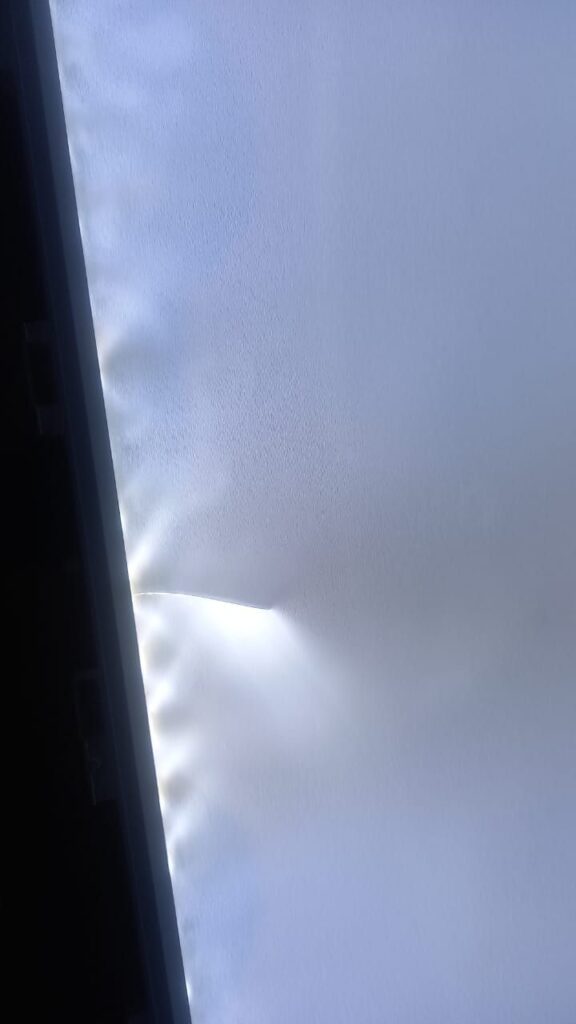
The phenomenon of a “burnt” or melted diffuser sheet on a Samsung TV is a hardware failure, and the most common cause is localized overheating from the LED backlights.
This issue is frequently reported on older edge-lit LED Samsung models, such as the NU7100 which place the LED strips along the edge of the TV panel.
Primary Cause: Overheating LED Backlights
The light from the LED strips must be spread evenly across the screen by a series of plastic diffuser sheets and lenses (also called diffusers or reflectors). When the diffuser sheet “burns,” it’s usually because:
- Faulty/Overdriven LEDs: A specific LED (or a small section of LEDs) on the strip is failing, operating at an abnormally high temperature, or receiving too much voltage.
- Heat Buildup: The extreme heat from the failing LED melts or warps the adjacent plastic diffuser sheet or the individual small plastic lens/bulb that sits directly over the LED.
- Physical Damage: The burnt or melted plastic piece then creates a permanent dark, discolored, or shadowy spot on the screen, as it can no longer pass or diffuse the light correctly.
Common Symptoms Associated with a Burned Diffuser
- Dark Spots or Dark Patches: The burnt area of the diffuser sheet blocks the light, creating a noticeable dark spot on the picture.
- Bright White Spots/Halos: If the small plastic lens that sits directly on top of the LED falls off due to heat/weak glue, the resulting beam of direct, intense light creates a small, very bright white spot or halo on the screen. Over time, the direct, intense light from the exposed LED can also lead to the sheet discoloration/burning.
- Half-Screen Darkness: In some edge-lit models (like the NU7100), the TV might have LED strips on two opposing edges (e.g., top and bottom). If one entire strip fails, the corresponding side of the TV will go dark, and you may find burn marks on the diffuser sheet near the failing strip.
What You Can Do
A burned diffuser sheet is a physical defect that cannot be fixed with software or settings.
- Professional Repair is Required: The television panel must be completely disassembled to access the internal diffuser sheets and backlight strips. The damaged LED strip and diffuser sheet (or lens) must be replaced.
- Self-Repair Risk: This is a very delicate repair, as the fragile LCD panel must be removed to access the backlights and can easily be cracked during the process.
- Preventive Measure: While the issue is primarily a hardware defect, manually lowering the Backlight setting in your TV’s picture settings can reduce the overall heat generated by the LEDs, potentially prolonging the life of the remaining strips and the diffuser sheets.